
Understanding Data Annotation: What It Means and Why It Matters
Quick Answer
Discover the meaning of data annotation, its importance in AI, and see real-world examples that illuminate its role in technology.
Table of Contents
Have you ever wondered how AI systems can recognize objects in images or comprehend human speech? The answer lies in a crucial process known as data annotation. This unsung hero of the AI world is the backbone that enables machines to learn and understand the world around them, bridging the gap between raw data and intelligent action.
Data annotation is the process of labeling data to make it understandable for machines. It's an essential step in training AI models, allowing them to learn and make accurate predictions. By providing structured information, data annotation transforms raw data into a rich resource for machine learning algorithms. This transformation is akin to teaching a child to recognize shapes and colors, forming the foundational knowledge that AI systems rely on to function effectively.
Table of Contents
- What is Data Annotation?
- Importance of Data Annotation in AI
- Real-World Data Annotation Examples
- AI Data Annotation Market in the Philippines
- Salary Ranges and Job Market Data
- One Thing Most Employers Get Wrong About Data Annotation
- FAQ
What is Data Annotation?
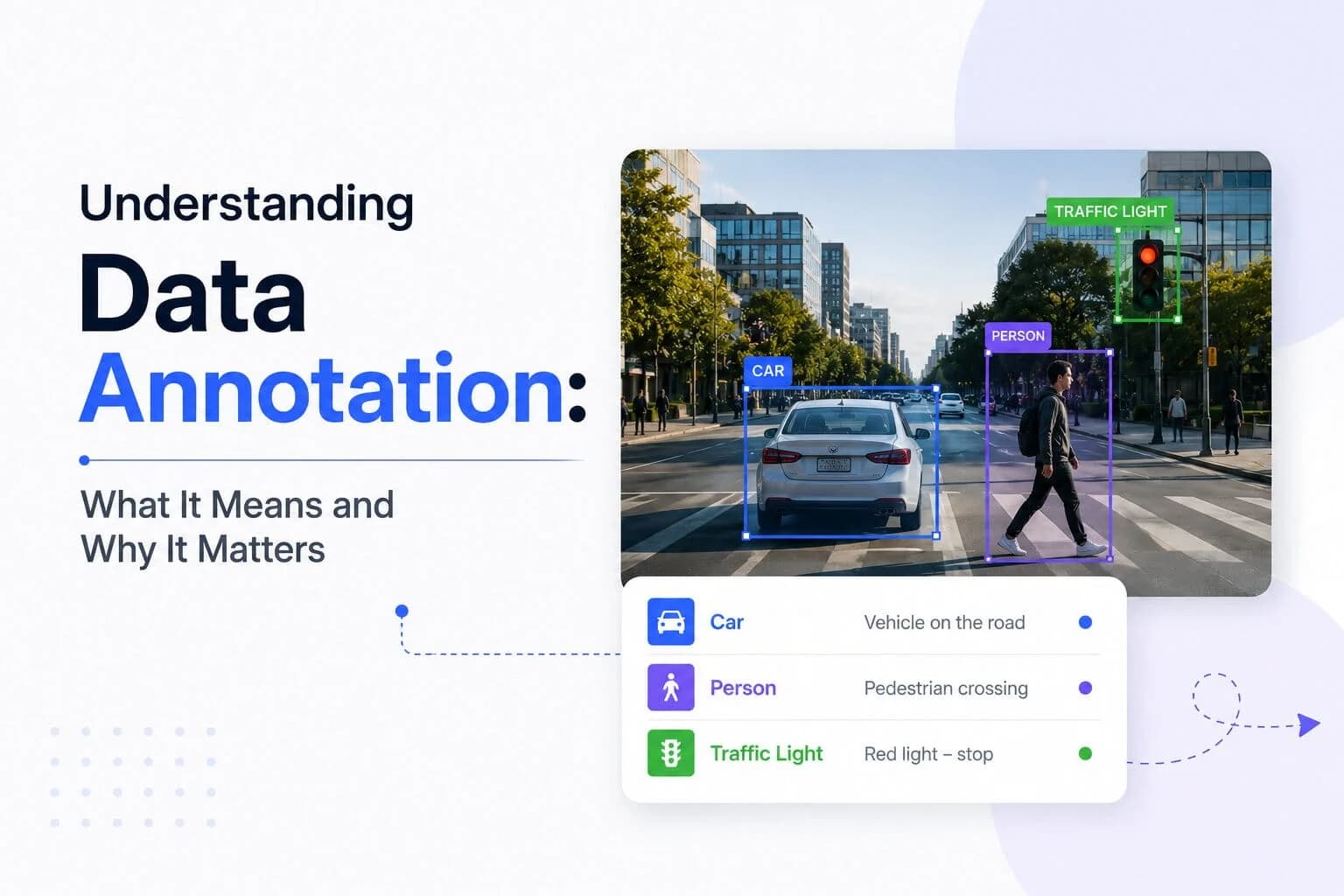
At its core, data annotation involves tagging or labeling data so that AI systems can "understand" it. This process is akin to providing a roadmap for AI models to follow, guiding them through the complex terrain of raw information. For instance, in image data annotation, objects within an image are labeled to help AI systems identify them in future images. This is a fundamental component of AI development, enabling systems to interpret and learn from data.
The variety in data types that can be annotated is vast, encompassing images, text, audio, and video. Each type requires specific techniques and tools, tailored to the nuances of the data format. For example, annotating audio data might involve transcribing spoken language, whereas video annotation could require frame-by-frame labeling of moving objects. This diversity in data types underscores the versatility of data annotation as a skill and its critical role in the AI lifecycle.
Data annotation is not just a mechanical task; it requires a deep understanding of the data context and the specific needs of the AI application. Annotators must possess a keen eye for detail and the ability to discern subtle differences that can significantly impact the accuracy of AI outcomes. This complexity elevates the role of the data annotator from mere labeler to a pivotal player in the AI development process.
Importance of Data Annotation in AI
Without data annotation, AI models would be unable to learn and make decisions. Properly labeled data ensures that AI systems can process information accurately and efficiently, forming the backbone of machine learning. The significance of this process cannot be overstated, as the quality of the training data directly influences the performance of AI models.
In the Philippines, where the GDP per capita is USD 3,984.83 (2024), embracing AI technology can lead to significant economic growth. As the unemployment rate stands at 2.24% (2025), the burgeoning AI industry presents new job opportunities, making data annotation a pivotal skill in the tech landscape. This economic context highlights the potential for data annotation to contribute to national development by fostering new industries and job markets.
The demand for high-quality annotated data is driven by the need for AI systems to operate in real-world scenarios. For instance, autonomous vehicles require precise data annotation to navigate complex environments safely. Similarly, in healthcare, AI applications depend on annotated medical images to assist in diagnostics. In each of these cases, the accuracy and reliability of AI systems hinge on the quality of the annotated data they are trained on.
Real-World Data Annotation Examples
Consider self-driving cars, which rely heavily on data annotation to function. These vehicles must differentiate between road signs, pedestrians, and other vehicles to navigate safely. Data annotation provides the necessary labels that enable AI systems within these cars to make split-second decisions, ensuring passenger safety and efficient transportation.
Another compelling example is virtual assistants like Siri or Alexa. These AI-driven applications rely on annotated audio data to understand and process voice commands. The accuracy of these systems in responding to user queries is directly linked to the quality of the data annotation, highlighting its critical role in delivering seamless user experiences.
In the field of healthcare, data annotation has transformative potential. AI systems trained with annotated medical images can assist doctors in diagnosing diseases, identifying anomalies, and tailoring treatment plans. This application not only enhances the accuracy of medical diagnoses but also improves patient outcomes by enabling more personalized care. Such advancements underscore the immense value of data annotation in driving innovation across diverse sectors.
AI Data Annotation Market in the Philippines
With 67.26% of the population using the internet (2024), the Philippines is well-positioned to leverage AI technologies. The country can capitalize on its large labor force of 52,204,133 (2025) to meet the growing demand for data annotation services. As global demand for AI solutions increases, the Philippines could become a key player in the AI data annotation sector, providing services to companies worldwide.
The growth of the AI industry in the Philippines is bolstered by its skilled workforce, competitive labor costs, and strategic geographical location. These factors combine to make the country an attractive destination for AI firms seeking cost-effective and high-quality data annotation services. Additionally, the widespread availability of internet connectivity facilitates remote work, enabling Filipino annotators to collaborate with international teams seamlessly.
As the AI market continues to expand, the Philippines stands to benefit significantly from increased foreign investment and job creation. The development of specialized training programs and partnerships with global tech companies could further enhance the country's capabilities in data annotation, positioning it as a leader in the field. Such advancements would not only boost the economy but also provide valuable opportunities for professional growth and development for Filipino workers.
Salary Ranges and Job Market Data
The burgeoning field of data annotation offers lucrative career opportunities for skilled professionals. As demand for annotated data continues to rise, so too does the potential for competitive salaries and job security. In the Philippines, data annotators can expect to benefit from favorable job market conditions, driven by the increasing need for AI solutions across various sectors.
While specific salary ranges for data annotation roles in the Philippines may vary depending on factors such as experience, expertise, and industry, the overall trend indicates a positive growth trajectory. As more companies invest in AI technologies, the demand for skilled annotators is likely to increase, leading to better compensation packages and career advancement opportunities.
The job market for data annotation is further bolstered by the availability of remote work opportunities, allowing professionals to access a global marketplace. This flexibility not only enhances work-life balance but also enables Filipino annotators to collaborate with international teams and gain valuable experience working on diverse projects. Such exposure can significantly enhance career prospects and position Filipino annotators as sought-after experts in the field.
Source: World Bank Open Data
One Thing Most Employers Get Wrong About Data Annotation
Many employers underestimate the complexity of data annotation. It's not just about labeling data; it's about understanding the context and nuances that machines need to learn. Skimping on quality can lead to poor AI performance. Investing in skilled annotators who understand the specific needs of your AI model is crucial for success.
A common misconception is that data annotation is a simple, low-skill task that can be outsourced without much oversight. However, the reality is that high-quality annotation requires a deep understanding of the data's context and the AI model's objectives. Poorly annotated data can result in biased or inaccurate AI models, ultimately compromising the technology's effectiveness.
To mitigate these risks, companies should prioritize training and development for their annotation teams, ensuring that they possess the necessary skills and knowledge to deliver high-quality results. Additionally, fostering a collaborative environment where annotators can provide feedback and insights can lead to more accurate and reliable data annotation, ultimately enhancing the performance of AI systems.
Frequently Asked Questions
What types of data can be annotated?
Data annotation can be applied to various types of data, including images, text, audio, and video, each requiring different techniques and expertise. This versatility makes it a critical component of AI development across diverse applications.
How does data annotation affect AI accuracy?
Accurate data annotation ensures that AI models can learn effectively, leading to better performance and more reliable predictions. High-quality annotation is essential for minimizing biases and errors in AI systems.
Who can become a data annotator?
Anyone with attention to detail and an understanding of the data context can become a data annotator. Training and experience can enhance proficiency, making it a viable career path for individuals interested in AI technology.
What tools are used for data annotation?
There are many tools available, ranging from simple labeling software to complex platforms that incorporate AI to assist human annotators. The choice of tool depends on the specific requirements of the annotation project.
Why is data annotation costly?
High-quality data annotation requires skilled labor to ensure precision and context understanding, which contributes to the overall cost. Investing in quality annotation is crucial for developing effective AI systems that deliver reliable results.
You might also like
More guides on Data Annotation.
Dataset Annotation: A Practical Guide to Accurate AI Training
Learn how dataset annotation turns raw images, text, and audio into reliable AI training data through clear rules, repeatable labeling, quality checks, and review.
Data Annotation: A Practical Guide for Filipino AI Beginners
Learn data annotation from setup to quality checks, with practical text, image, and audio examples plus skills guidance for Filipino remote-work learners.
How to Master AI Data Annotation: A Step-by-Step Guide
Learn AI data annotation with this step-by-step guide, covering essential techniques and examples for effective data preparation.
Data Annotator Meaning: What It Is and Why It Matters
Explore the role of data annotators and why their work is crucial in today's AI-driven world.
Latest Virtual Assistant Jobs
Fresh remote VA roles: apply directly
Controller for Financial Operations at Ritual - Remote
Drive Business Performance as Chief of Staff, CCO at Ping Identity - Remote
Enterprise Account Executive for Federal Civilian at Asana - Hybrid
Lead Product-Led Growth Strategies at Upsun - Remote