
Data Annotator Meaning: What It Is and Why It Matters
Quick Answer
Explore the role of data annotators and why their work is crucial in today's AI-driven world.
Table of Contents
In an era where artificial intelligence shapes industries, the role of data annotators is more vital than ever. Yet, many remain unaware of what data annotators actually do and why their contributions are indispensable.
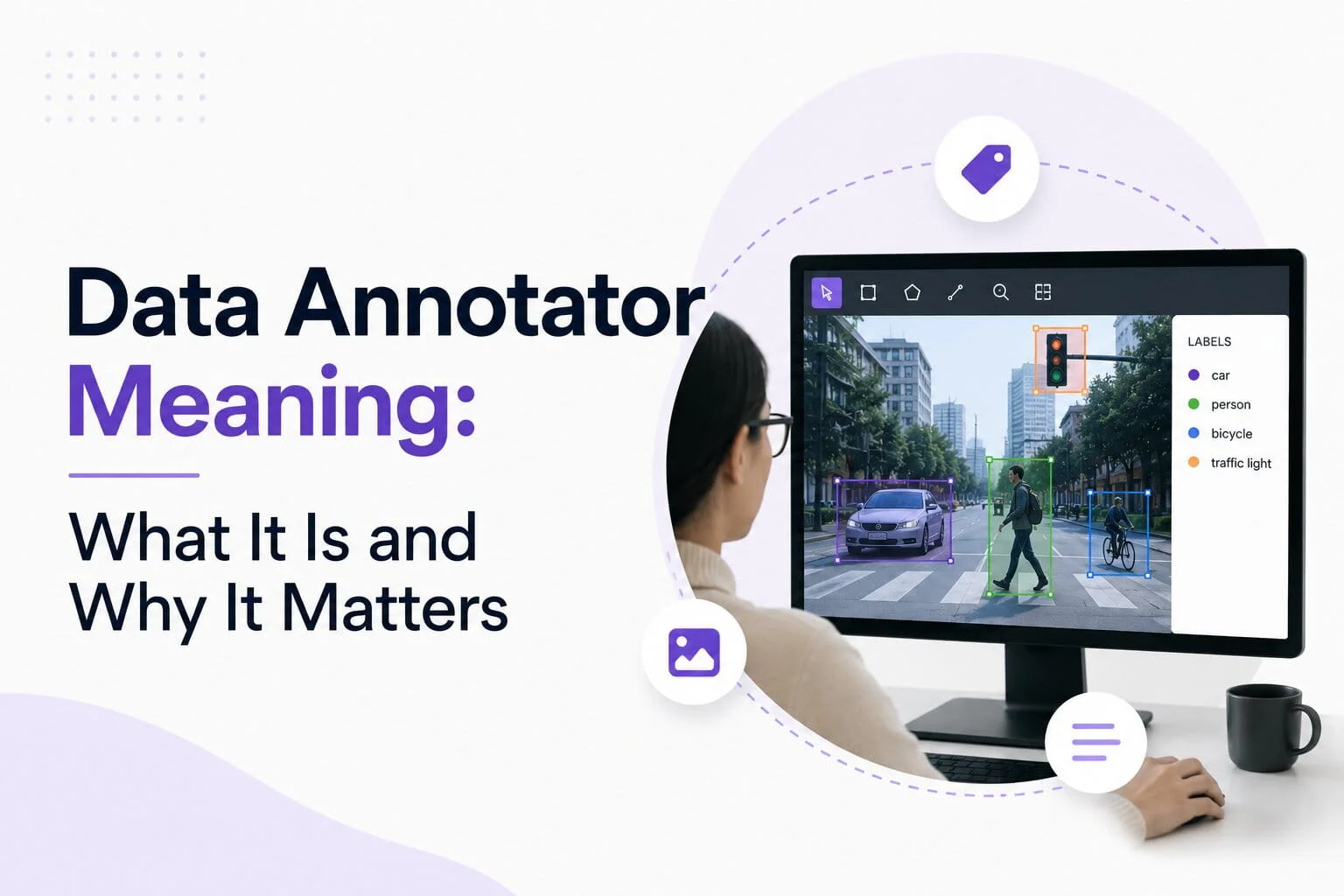
Simply put, a data annotator is responsible for labeling and categorizing data used to train AI models. These professionals ensure that machine learning algorithms understand the real-world context of the data they process. Without their work, AI systems would struggle to function accurately in complex environments.
Table of Contents
- What Are Data Annotators and Why They Matter
- Tasks of a Data Annotator: A Day in the Life
- Benefits of Data Labeling in AI Development
- Data Annotator Job Market Insights in the Philippines
- The Risks of Poor Data Annotation
- Frequently Asked Questions
What Are Data Annotators and Why They Matter
Data annotators are the unsung heroes of the AI world. They provide the meticulously labeled datasets that machines need to learn. Imagine trying to teach a child without ever naming objects or explaining concepts. That's how AI would operate without data annotators. By assigning labels to images, text, and other data forms, annotators help AI systems recognize patterns and make decisions. In the Philippines, where internet penetration is at 67.26% of the population (World Bank, 2024), data annotation is a burgeoning field, supporting a vast array of industries from healthcare to autonomous vehicles.
Understanding the meaning of data annotation is crucial in today's digital age. As AI technologies advance, the demand for high-quality, annotated data grows exponentially. This demand is largely driven by the need for AI systems to be trained on diverse and accurate datasets, which can only be achieved through precise data annotation. The role of data annotators is thus foundational in developing reliable AI models, impacting everything from voice recognition systems to autonomous driving technologies.
The importance of data annotators extends beyond just the technical sphere. Their work has social and economic implications as well. By enabling AI systems to function more effectively, data annotators indirectly influence areas like healthcare, where AI can assist in diagnosing diseases earlier and more accurately. Furthermore, as businesses increasingly rely on AI to streamline operations, the demand for data annotators becomes a significant economic driver, creating job opportunities in emerging markets like the Philippines.
Tasks of a Data Annotator: A Day in the Life
The daily tasks of a data annotator can vary but generally include labeling data sets by tagging images, transcribing audio, and categorizing text. They must ensure high accuracy since even minor errors can lead to significant AI malfunctions. The role requires a keen eye for detail and an understanding of the domain they are working in. In a country like the Philippines, with a labor force of over 52 million (World Bank, 2025), this job provides opportunities for many to engage in high-tech work from home, aligning with global standards.
Beyond the basic tasks, data annotators often engage in complex problem-solving. For instance, they might be tasked with identifying nuances in language that could affect AI's understanding of text, which is especially crucial in natural language processing applications. This requires not only language proficiency but also cultural awareness, something Filipino annotators excel at given their bilingual capabilities and exposure to diverse cultures.
Moreover, data annotators frequently collaborate with data scientists and machine learning engineers to refine datasets. This collaboration is essential to ensure that the annotated data aligns with the specific requirements of AI models. Annotators may provide feedback on data quality and suggest improvements, making them indispensable members of the AI development team. This collaborative environment also offers them the chance to enhance their skills and knowledge, making the profession both challenging and rewarding.
Benefits of Data Labeling in AI Development
Data labeling is crucial for AI development. It enhances the quality of machine learning models by providing them with reliable data to learn from. This process improves the efficiency of AI systems across industries, leading to better customer experiences and operational efficiencies. For businesses in the Philippines, utilizing local talent for data annotation can reduce costs and foster economic growth, given the country's GDP per capita of USD 3,984.83 (World Bank, 2024).
High-quality data labeling leads to more accurate AI models, which in turn results in better decision-making capabilities for businesses. For example, in the retail sector, AI systems can analyze consumer behavior and predict trends more accurately, allowing for better inventory management and personalized marketing strategies. In healthcare, properly annotated medical images can significantly improve diagnostic accuracy, leading to better patient outcomes.
Additionally, the economic benefits of data labeling cannot be overstated. By outsourcing data annotation to countries like the Philippines, companies can take advantage of lower labor costs while still maintaining high standards of quality. This not only benefits businesses but also stimulates the local economy by creating job opportunities and developing the workforce's technological skills. As AI continues to integrate into various sectors, the demand for skilled data annotators will likely continue to rise, further driving economic growth.
Data Annotator Job Market Insights in the Philippines
The demand for data annotators is rising globally, and the Philippines is no exception. With an unemployment rate of just 2.24% (World Bank, 2025), the job market is competitive, but skilled annotators are always in demand. Companies looking to leverage AI capabilities can benefit from the local workforce's proficiency in English and familiarity with Western cultures, making the Philippines an attractive destination for outsourcing data annotation tasks.
The Philippines offers a unique advantage in the data annotation job market due to its strong educational system and a young, tech-savvy workforce. Many Filipinos are highly educated and possess strong English language skills, which are crucial for data annotation tasks that often require understanding and interpreting complex information. This makes the country an ideal hub for data labeling services, catering to international companies needing high-quality annotated data.
Furthermore, the growth of the IT-BPM (Information Technology and Business Process Management) industry in the Philippines has laid a strong foundation for the expansion of data annotation services. As more companies recognize the strategic importance of AI, the demand for data annotation services is expected to grow, providing numerous opportunities for employment and skills development. This trend not only benefits the local economy but also positions the Philippines as a leader in the global data annotation landscape.
Source: World Bank Open Data
The Risks of Poor Data Annotation
One often overlooked risk is the impact of poor data annotation. Incorrectly labeled data can lead to AI models making inaccurate predictions, which can be costly for businesses. For instance, mislabeling medical images can result in misdiagnoses, while errors in autonomous vehicle data can lead to safety hazards. Therefore, investing in skilled data annotators is crucial for maintaining the integrity and functionality of AI systems.
Errors in data annotation can have ripple effects across entire industries. In finance, for example, AI systems rely on accurate data to detect fraudulent activities or assess credit risks. Poorly labeled data can lead to false alarms or missed detections, causing financial losses and damaging trust with clients. Similarly, in the field of autonomous driving, the consequences of data annotation errors can be dire, potentially leading to accidents or malfunctions in vehicle systems.
Moreover, the reputational damage resulting from AI failures due to poor data annotation can be significant. Companies that rely on AI solutions often promote their reliability and precision as key selling points. When these systems fail, it can lead to loss of consumer confidence and harm to the brand's reputation. Thus, ensuring high standards in data annotation is not just a technical necessity but a strategic imperative for businesses aiming to maintain their competitive edge in the AI-driven market.
Frequently Asked Questions
What skills are needed to become a data annotator?
Attention to detail, domain-specific knowledge, and proficiency in using annotation tools are essential skills for data annotators. Additionally, strong communication skills and the ability to work collaboratively with data scientists and AI developers can enhance their contributions and career prospects.
How does data annotation impact AI training?
Data annotation provides the necessary context for AI algorithms to learn, significantly impacting their performance and accuracy. Properly annotated data ensures that AI systems can recognize patterns and make informed decisions, leading to more reliable and effective outcomes across various applications.
Can data annotation be automated?
While some aspects can be automated, human intervention is often required to ensure precision and handle complex data. Automated systems may struggle with nuanced or ambiguous data, where human judgment is necessary to provide accurate labels and annotations.
Why is data annotation important for businesses?
Accurate data annotation leads to reliable AI models, which improve decision-making and operational efficiency for businesses. By investing in quality data annotation, companies can enhance their AI capabilities, leading to better products, services, and customer experiences.
Where can I learn more about data annotation?
Explore articles like Understanding Data Annotators: What They Do and Why It Matters for further insights. There are also various online courses and workshops available that cover the fundamentals of data annotation and its applications in AI development.
You might also like
More guides on Data Annotation.
Dataset Annotation: A Practical Guide to Accurate AI Training
Learn how dataset annotation turns raw images, text, and audio into reliable AI training data through clear rules, repeatable labeling, quality checks, and review.
Data Annotation: A Practical Guide for Filipino AI Beginners
Learn data annotation from setup to quality checks, with practical text, image, and audio examples plus skills guidance for Filipino remote-work learners.
How to Master AI Data Annotation: A Step-by-Step Guide
Learn AI data annotation with this step-by-step guide, covering essential techniques and examples for effective data preparation.
Understanding Data Annotation: What It Means and Why It Matters
Discover the meaning of data annotation, its importance in AI, and see real-world examples that illuminate its role in technology.
Latest Virtual Assistant Jobs
Fresh remote VA roles: apply directly