
Dental Care for Veterans: Verify VA Eligibility Before Booking
Quick Answer
Learn how dental care for veterans works: confirm VA eligibility, choose VA, Community Care, or VADIP, and verify your dentist before treatment to avoid bills.
Table of Contents
- 1.Step 1: Confirm Your Dental Care for Veterans Eligibility
- 2.Step 2: Choose VA Dental, Community Care, or VADIP
- 3.Step 3: Verify a Local Dentist Before You Book
- 4.Step 4: Call the Office With the Right Questions
- 5.Veteran Dental Access and Online Research: Key U.S. Context
- 6.The Authorization Number Matters More Than a Dentist's Veteran-Friendly Claim
- 7.Frequently Asked Questions
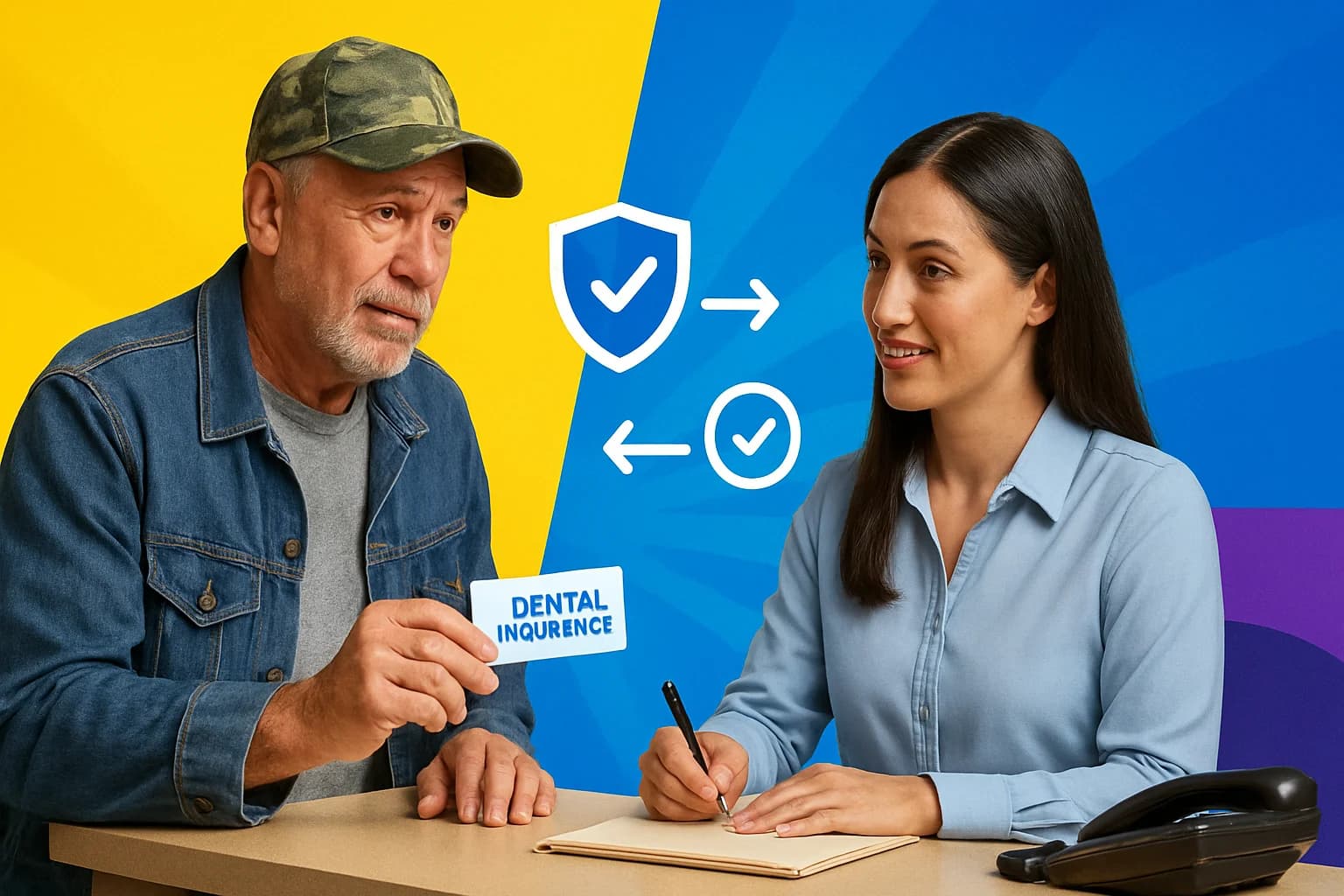
One costly misconception catches veterans every day: enrolling in VA health care does not automatically mean you have comprehensive dental care for veterans. Coverage depends on your VA dental eligibility class, service-connected circumstances, and the route used to receive care. Book the wrong civilian office before confirming those details, and a routine exam can become an unexpected bill. This guide follows the practical order that prevents that problem: confirm benefits, secure authorization if needed, then verify the exact dentist.
Quick answer: First, confirm VA dental eligibility and covered services directly with VA. Then use the route that applies to you: a VA dental clinic, VA-authorized Community Care, or the VA Dental Insurance Program, known as VADIP, if you are eligible to purchase coverage. Do not assume a civilian office is VA-approved because it says it serves veterans. Verify any referral or authorization before treatment begins.
Table of Contents
- Step 1: Confirm Your Dental Care for Veterans Eligibility
- Step 2: Choose VA Dental, Community Care, or VADIP
- Step 3: Verify a Local Dentist Before You Book
- Step 4: Call the Office With the Right Questions
- Veteran Dental Access and Online Research: Key U.S. Context
Step 1: Confirm Your Dental Care for Veterans Eligibility
VA dental benefits are separate from VA health care enrollment. That distinction matters because a veteran may be fully enrolled in VA health care yet not qualify for broad dental treatment. Before comparing offices, ask VA whether you qualify for dental care and exactly what services are covered in your situation.
In practical terms, some veterans qualify for comprehensive VA dental care. Others may qualify only for a one-time course of treatment, or a limited course tied to a qualifying condition, discharge status, service-connected disability, or another specific circumstance. The scope is as important as the yes-or-no eligibility answer. For example, do not assume that being eligible for a dental evaluation means every restorative procedure will follow through the same route.
Use official VA eligibility information and your VA care team as the starting point. A provider directory can tell you an office exists, but it cannot make an eligibility decision for you. The broad search phrase dental for veterans can be useful for research, but eligibility controls what you should do next. For a closer breakdown, see dental for veterans eligibility, VADIP, and dentist options.
Have your VA information ready when you call or message: your full name, date of birth, VA identification details if available, and a clear description of the care you need. Ask two direct questions: “Am I currently eligible for VA dental care?” and “What is my authorized path for this specific need?” Those questions are more useful than asking a search engine whether a nearby dentist “takes VA.”
Step 2: Choose VA Dental, Community Care, or VADIP
Once you know your eligibility, choose the care route in this order. First, eligible veterans may receive care through a VA dental clinic. Second, Community Care may be an option when VA coordinates and authorizes care outside its facility. Third, VADIP may suit eligible veterans and certain family members who want to buy private dental insurance.
Community Care is not simply a matter of finding a local practice that welcomes veterans. VA generally needs to coordinate the outside visit, and the authorization needs to match the patient, office, provider, and service. A search for a veterans dental center does not prove that the office has a VA contract or that it has active authorization for your appointment.
VADIP is different. It is dental insurance, not free VA dental treatment. Eligible participants buy a plan, pay premiums, follow that insurer's network and benefit rules, and may still have deductibles, copays, coinsurance, annual limits, or charges for noncovered work. It can be a sensible route for ongoing preventive care, but review the plan documents before assuming a procedure is fully covered. For more detail, read Veterans Dental Center eligibility, Community Care, and VADIP.
Use this short checklist before an appointment:
- Do I have VA dental eligibility for the care I need?
- Has VA referred or authorized this particular visit?
- Is this exact office in the relevant Community Care network or VADIP plan?
- What, if anything, will I owe at the visit?
Consider a veteran who calls a nearby practice after seeing a veteran-friendly message online. The receptionist says the office works with many veterans, but the veteran then learns that VA authorization was required for this non-VA appointment. By contacting VA before treatment, the veteran can correct the process, obtain the appropriate direction, and avoid assuming the practice will bill VA.

Step 3: Verify a Local Dentist Before You Book
Location searches are useful, but they are not verification. Searches such as herndon dental or vienna dental can return similarly named practices, multiple locations, different participating dentists, and broad marketing claims. None of those results establishes that your benefit will apply to the appointment you want.
Cross-check the exact practice name, street address, phone number, named provider, and services needed. Then confirm current network status and referral requirements with the right party: VA for Community Care, your VADIP insurer when insurance is involved, and the practice itself. If a group has three locations, do not assume participation at one address carries over to another. The same applies when a specific dentist works at more than one office.
Online reviews still have a role. They can reveal whether an office communicates clearly, explains estimates, handles scheduling well, or has long wait times. They cannot confirm VA eligibility, insurance coverage, or whether an authorization is active. Most people get this wrong by treating a five-star review as evidence that billing will work. It is evidence of a customer experience, not a benefit determination.
For local research that keeps those checks in view, see how to choose the right Herndon dental provider and how to choose the right Vienna dental provider.
Step 4: Call the Office With the Right Questions
Use search results as leads, then make one careful call before booking. This applies whether you searched orange va dentist, my mclean dentist, midlothian dentist, or a branded practice such as atencio dentistry. Search snippets are often incomplete or outdated, so exact-office confirmation is the safer move.
A concise call script can sound like this: “I am confirming an appointment with Dr. [name] at your [street address] location. Do you accept my specific VADIP plan, or do you have a current VA Community Care authorization for my visit? Do you need a referral or authorization number before I come in? Can you provide a written estimate of what I may owe?”
Before you go, confirm the appointment date, dentist name, office location, plan or authorization details, and estimate. Record the representative's name, the date and time of the call, and every authorization or reference number given. A short note on your phone can save hours of disputes later.
Two common outcomes show why this matters. For a preventive cleaning under an active VADIP plan, the office may confirm network participation and tell you the expected patient share before the visit. For an urgent dental problem, the safer first move is to contact VA and determine the appropriate authorized path, rather than assuming the nearest office can bill VA after the fact. For additional local screening tips, use this Orange VA dentist provider and cost verification guide or learn how to choose a Midlothian dentist.

Veteran Dental Access and Online Research: Key U.S. Context
Online research makes the first steps faster. In 2024, 94.69% of Americans used the internet, according to the World Bank. That access makes it easier to compare locations, find phone numbers, read plan materials, and contact VA, but it does not replace confirmation from VA or an insurer.
Economic figures are context, not a coverage calculator. U.S. GDP per capita was $90,026.52 in 2025 and unemployment was 4.2% in 2025, both reported by the World Bank. National figures cannot predict an individual veteran's dental eligibility, premium, copay, or out-of-pocket bill. Your eligibility category, authorization status, selected plan, and the service being performed are what determine the next action.
Source: World Bank Open Data
The Authorization Number Matters More Than a Dentist's Veteran-Friendly Claim
A clinically excellent practice can still be the wrong payment route for a particular visit. “We welcome veterans” may mean the office is simply respectful and experienced with veteran patients. “We accept your VADIP plan” means it participates in a commercial insurance arrangement, subject to that plan's current rules. “We have a VA-authorized referral for your specific appointment” is a separate and much more precise statement.
For Community Care, the authorization must be current and tied to the specific patient and service. Do not treat a directory result, a front-desk verbal assurance, or an old referral as a substitute for current documented authorization. Ask for the relevant reference number and confirm it before treatment, especially if the appointment changes, the provider changes, or the office asks to add work beyond the original visit.
Keep a compact records file: your eligibility decision, referral or authorization number if applicable, insurer card, written estimate, and office contact details. It is a small administrative habit, but it is often the difference between a straightforward visit and a preventable billing problem.
Frequently Asked Questions
Do all veterans qualify for free dental care through the VA?
No. VA dental eligibility depends on the veteran's eligibility category and circumstances. VA health care enrollment alone does not automatically provide comprehensive dental coverage. Confirm eligibility and covered services directly with VA.
Can I use any local dentist for VA dental care?
Not automatically. A non-VA appointment may require a VA Community Care referral or authorization before treatment. Verify the exact office, provider, service, and authorization status before booking.
What is VADIP and does it provide free dental treatment?
VADIP is the VA Dental Insurance Program for eligible veterans and certain family members. It involves buying a dental insurance plan with premiums, coverage rules, and possible out-of-pocket costs. It is separate from direct VA dental benefits and Community Care.
What should I ask a dentist's office before my first visit?
Ask whether it accepts your specific VADIP plan or can work with a current VA Community Care authorization. Request a written estimate and ask whether a referral or authorization number is needed before the visit. Record who confirmed the details and the date of the call.
You might also like
More guides on Dental VA.
How to Choose the Right Herndon Dental Provider Before Booking
Learn how to compare Herndon dental offices, verify insurance, check availability, and prepare confidently for a first visit with fewer costly surprises overall.
Orange VA Dentist: How to Verify Providers, Costs, and Care Locally
Learn how to find an Orange VA dentist by verifying licenses, insurance coverage, access, costs, emergency policies, and long-term care fit before booking.
My McLean Dentist: How to Choose the Right Dental Practice for You
Learn how to find the right my McLean dentist by matching care needs, verifying licensure and insurance, and comparing access before booking with confidence.
Veterans Dental Center: VA Eligibility, Community Care & VADIP
Learn how to use a veterans dental center by checking VA eligibility, Community Care authorization, or VADIP options to avoid surprise bills before care starts.
Latest Virtual Assistant Jobs
Fresh remote VA roles: apply directly
Design Customer Success Processes as a Tier 3 Specialist at Neowork - Remote
Video Editor for Real Estate Projects at Neowork - Remote
Bilingual Help Desk & Client Support Specialist at Neowork - Remote
Executive Assistant for Senior Leadership at Wing Assistant - Remote