
Boutique Social Media Agency Checklist for Smarter Agency Hiring
Quick Answer
Use this boutique social media agency checklist to compare strategy, execution, reporting, security, ownership, and communication before signing or renewing a provider.
Table of Contents
A boutique social media agency can give a growing business the strategic attention that larger, layered firms often cannot. It can also become an expensive content factory if nobody can connect posts, approval decisions, and monthly reporting to a commercial goal. That risk matters in a market where 94.69% of Americans used the internet in 2024, according to the World Bank. Your prospective customers are reachable online. The harder question is whether the team you hire can turn that reach into qualified conversations, leads, purchases, or retention. Use this checklist before you shortlist a provider, renew a retainer, or replace an agency that is producing activity without accountability.
Start by defining the business outcome, then select the scope needed to support it. Request evidence of relevant work, verify who will actually perform each task, and compare proposals by deliverables and decision-making speed, not follower counts. A boutique agency is usually a strong fit when you want senior attention and a focused cross-functional team, but only when roles, response times, approval rights, and access to accounts are written down.
As you review a boutique social media agency or interview a dedicated remote hire, score every candidate against four areas: strategy, execution, reporting, and communication ownership. A polished pitch should not earn a high score until the provider shows how those four parts connect in day-to-day work.
Boutique Social Media Agency Checklist: Match the Team to the Work You Actually Need
Before comparing portfolios, decide what you are really buying. “More social media” is not a workable scope. A B2B firm trying to build trust with buyers on LinkedIn needs a different operation from a home services company that needs fast Facebook and Instagram responses after hours. Name the platforms that matter, identify the relevant stage of the buyer journey, and set the business result that content should support.
- List the platforms and buyer stage. For example, use LinkedIn for awareness and credibility among operations leaders, then use paid retargeting or a landing page to move interested visitors toward a demo.
- Identify the actual need. Is it brand strategy, daily publishing, community management, paid campaign support, creator coordination, video editing, analytics, or some combination?
- Assign ownership by function. Ask who develops the strategy, writes captions, designs assets, approves posts, responds to comments, manages paid activity, and interprets results.
- Request the names of the actual account team. Ask about their industry experience, workload, seniority, and the number of accounts they currently manage.
- Set one accountable lead. You need one person responsible for keeping deadlines, decisions, risks, and monthly recommendations moving.
Employers searching for social media managers near me often make physical location the primary filter. Most people get this wrong. Unless local filming, in-person events, or regional cultural knowledge is central to the work, availability during your business hours, communication cadence, industry familiarity, and access controls matter far more. A capable remote team with clear overlap and a documented process will usually outperform a nearby provider who takes two days to answer an approval question.
A boutique team is worth the investment when the work requires several connected capabilities. Think strategy plus content production, campaign coordination, comment management, reporting, and paid support. It is also useful when your internal team needs a senior partner to challenge assumptions instead of merely accepting a list of post ideas. One social media specialist may be enough when you have a stable brand, a narrow channel focus, reusable assets, and an in-house decision maker who can provide direction quickly. A social media consultant makes sense when the main gap is diagnosis: perhaps you need an audit, positioning help, a channel plan, or training for an existing employee, but not daily execution.
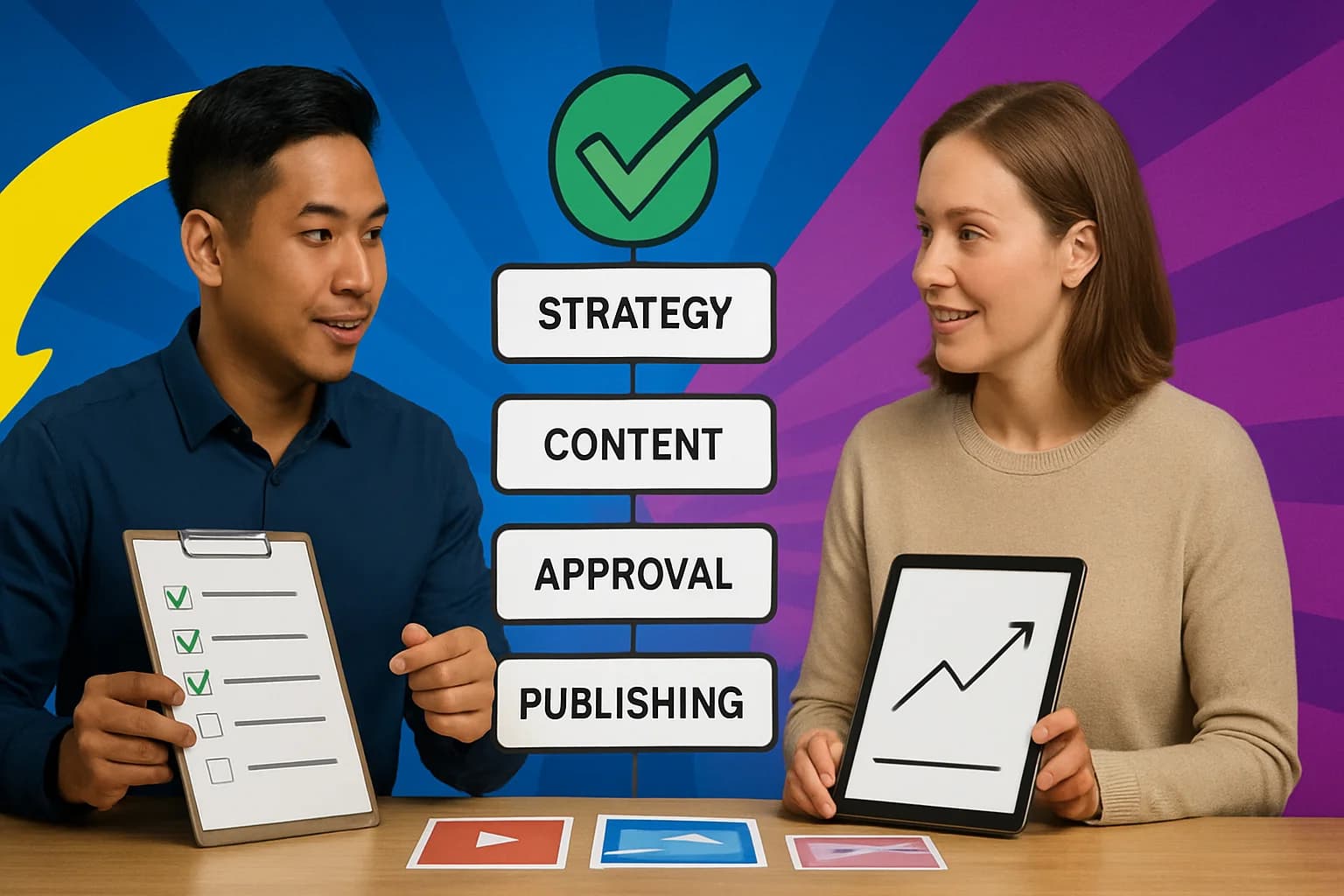
Run the hidden operational test that many buyers skip. Ask each candidate to map one campaign from brief to approval, publishing, engagement, optimization, and reporting. Require named owners and expected turnaround times at every point. For example: the strategist turns a brief into a concept, the designer delivers assets, your marketing lead approves within one business day, the community manager handles comments, and the account lead reports what changed and why. This simple exercise exposes whether the agency has a real workflow or only a good sales presentation.
How to Compare a Social Media Management Service and Promotion Strategy Before You Outsource
A credible social media management service defines the operating details, not just the number of posts. Its proposal should identify the number of platforms covered, content formats, monthly volume, whether creative is original or template-based, caption writing responsibilities, community-response coverage, reporting frequency, revision limits, and clear exclusions. If a proposal says “full-service” but leaves those items open to interpretation, assume you will discover the limits after signing.
- Content production: How many short videos, static graphics, carousels, stories, and captions are included? Who supplies product footage, customer quotes, and subject matter expertise?
- Community management: Which inboxes and comment sections are monitored? During what hours? Which questions can the team answer, and which must be escalated?
- Reporting: Will you receive raw platform metrics, a business-focused summary, or both? Who explains the recommended changes?
- Approvals: How many revision rounds are included, how are urgent changes handled, and what occurs when your team delays feedback?
Then examine the proposed social media promotion strategy. A useful plan states the target audience, the distinct roles of organic and paid content, the campaign objective, the creative testing plan, the conversion path, the measurement method, and the rule for scaling or stopping spend. “We will boost the best posts” is not a strategy. Ask how the team defines “best.” A post with high views may be useful for awareness but poor at generating sales inquiries. The objective and measurement have to match.
To outsource social media management safely, treat it as a procurement decision, not a creative favor. Your business should retain ownership of every social account, advertising account, pixel, audience, source file, and final asset. Give the provider role-based administrator access rather than sharing a founder’s password. Confirm who can approve publishing, who can launch paid activity, how access is removed at the end of the relationship, and whether editable source files are included. These details feel administrative until you need to switch providers quickly.
A social media management consultant generally delivers an audit, channel strategy, messaging guidance, measurement framework, and sometimes leadership coaching. An ongoing management provider takes responsibility for producing, publishing, monitoring, and improving the work week after week. Neither model is automatically better. The mistake is buying consultant-level direction when you need hands-on execution, or paying for a full delivery team when your internal marketing staff can execute a well-defined plan.
Consider two common buying situations. A multi-location local service business seeking leads needs conversion tracking, location-aware creative, prompt response handling, and a clear way to route inquiries to the right team. A product launch may instead need a tightly structured social media campaign with launch creative, creator coordination, paid amplification, and rapid testing. Those scopes should not be priced or staffed the same way. Be cautious with proposals priced only by post count. Post counts conceal the labor behind strategy, editing, moderation, testing, and reporting, which are often the parts that determine whether content supports a business result.
How to Vet a Boutique Social Media Agency Before Signing a Contract
Use a structured review process so your decision does not depend on the best-looking portfolio or the most confident discovery call.
- Write a one-page brief. Include your audience, offer, channels, goal, existing assets, brand constraints, compliance requirements, budget boundaries, and internal approval contacts. A specific brief produces proposals you can compare.
- Ask for two relevant case examples. Request examples close to your business model, objective, or audience. Ask exactly what the agency performed: strategy, creative, publishing, paid media, creator outreach, community management, or reporting. Do not credit an agency for results created mostly by the client’s internal team.
- Request a 30-day onboarding plan. It should show discovery activities, access setup, brand familiarization, content planning, approval steps, baseline measurement, and the first reporting checkpoint.
- Review a sample content calendar and reporting format. You are looking for decision quality, not confidential client data. Can you see why each content item exists, what action it is intended to encourage, and how performance will affect the next month’s plan?
- Test difficult situations. Ask how the team handles brand-risk comments, delayed approvals, a customer complaint gaining attention, and an urgent post requested outside the usual schedule.
- Confirm security and ownership. Verify login methods, password manager use, administrator access, asset storage, account ownership, and the offboarding process before the contract begins.
- Start with a defined pilot or measurable review points. The agreement should establish what is being tested, which leading indicators matter, who reviews performance, and how either side can adjust scope based on evidence.
During interviews, ask direct questions: Who writes the strategy? Who designs the assets? What happens if the account lead is unavailable? How are revisions counted? Which metrics trigger a recommendation to change the plan? Strong providers answer with names, process, and examples. Weak ones answer with broad assurances about “engagement” or “going viral.” If you need ongoing execution but prefer a more dedicated staffing model, use the same questions when evaluating a remote social media professional. The workflow and accountability standards should remain the same.

A disciplined selection process matters because the US provider market is broad and specialized. Professional and business services employed 22.547 million workers in September 2026, up 0.5% year over year, according to the U.S. Bureau of Labor Statistics. With US unemployment at 4.2% in 2025, per the World Bank, capable operators may be selective, while vague briefs invite vague proposals from everyone else. Retain written records of scope, ownership, approval rules, response expectations, and reporting commitments. Those documents protect both sides and make it much easier to tell whether your investment is producing useful work.
Recommended for you
You might also like
More guides on Social Media Managers Near Me.
Social Media Management Service Checklist for Growing US Businesses
Use this social media management service checklist to choose support, build a strategy, outsource safely, protect control, and measure leads—not likes alone.
Outsource Social Media Management: A Practical Hiring Guide
Learn how to outsource social media management with the right scope, strategy, hiring scorecard, access controls, and reporting metrics for measurable growth.
Social Media Marketing Agency Near Me: A Smarter Hiring Checklist
Compare a social media marketing agency near me with specialists and remote teams using a practical checklist for scope, access, campaigns, reporting, and hiring.
How to Choose the Best Social Media Management Company for You
Compare local agencies, consultants, and outsourced teams to find the best social media management company for your goals, workflow, budget, and growth today.
Latest Virtual Assistant Jobs
Fresh remote VA roles: apply directly
Design Customer Success Processes as a Tier 3 Specialist at Neowork - Remote
Video Editor for Real Estate Projects at Neowork - Remote
Bilingual Help Desk & Client Support Specialist at Neowork - Remote
Executive Assistant for Senior Leadership at Wing Assistant - Remote