
Understanding Pax Silica: A Step-by-Step Guide
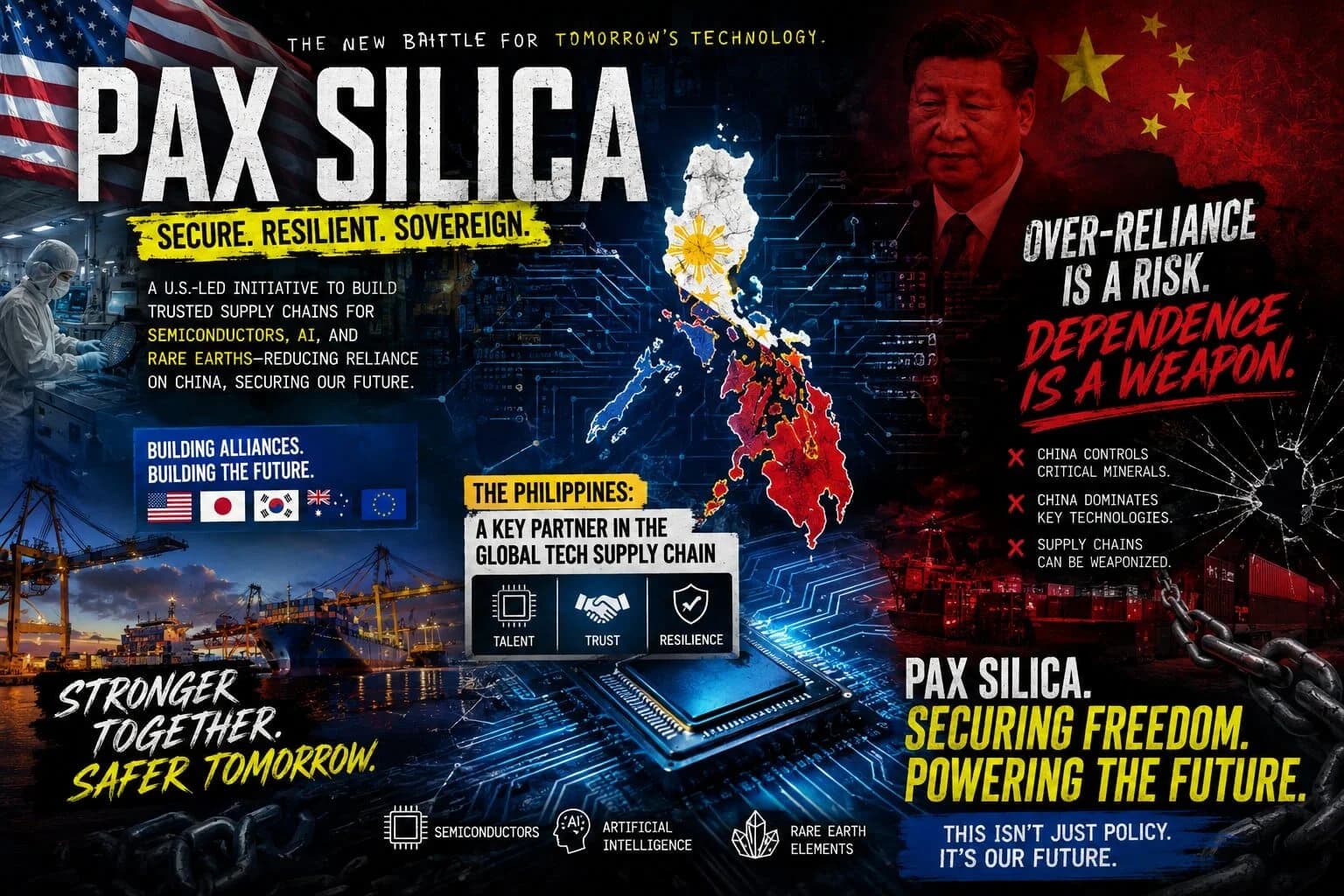
Quick Answer
Discover Pax Silica, an initiative to secure tech supply chains, and learn how it counters China's dominance.
Table of Contents
- 1.What is Pax Silica?
- 2.How and Why Pax Silica Was Created
- 3.Which Countries Are Involved in Pax Silica?
- 4.The Importance of Securing Supply Chains
- 5.Why the Philippines Matters to Pax Silica
- 6.Pax Silica and New Clark City
- 7.Potential Investment and Jobs in the Philippines
- 8.What Pax Silica Means for the Philippine Semiconductor Industry
- 9.How Does Pax Silica Work?
- 10.Real-World Impact of Pax Silica
- 11.Pax Silica: Key Facts and Figures
- 12.Pax Silica and China
- 13.Challenges and Risks
- 14.The Impact of Pax Silica on Global Tech Dynamics
- 15.What Happens Next?
- 16.What Could Pax Silica Mean for the Philippine Virtual Assistant and Outsourcing Market?
- 17.Frequently Asked Questions
In today's rapidly evolving tech landscape, initiatives like Pax Silica are crucial in shaping the future of international supply chains. But what exactly is Pax Silica, and why does it matter?
Pax Silica is a United States-led initiative focused on building more secure and resilient supply chains for strategically important technologies, including semiconductors, artificial intelligence (AI), critical minerals, and advanced manufacturing. The initiative reflects a broader effort to reduce excessive dependence on concentrated supply chains and strengthen cooperation among trusted economic and technology partners. Wikipedia.
For the Philippines, Pax Silica could be particularly significant. The country already plays an important role in the global electronics and semiconductor industry, and closer participation in international technology supply chains could create opportunities for investment, skilled employment, advanced manufacturing, and technology development.
Table of Contents
What is Pax Silica?
How and Why Pax Silica Was Created
Which Countries Are Involved in Pax Silica?
The Importance of Securing Supply Chains
Why the Philippines Matters to Pax Silica
Pax Silica and New Clark City
Potential Investment and Jobs in the Philippines
What Pax Silica Means for the Philippine Semiconductor Industry
How Does Pax Silica Work?
Real-World Impact of Pax Silica
Pax Silica: Key Facts and Figures
Pax Silica and China
Challenges and Risks
The Impact of Pax Silica on Global Tech Dynamics
What Happens Next?
Frequently Asked Questions
What is Pax Silica?
Pax Silica is essentially a collaborative effort spearheaded by the United States to fortify the supply chains of essential technologies. These technologies are not only pivotal for everyday gadgets but also play a significant role in national security and economic stability. The focus on semiconductors, AI, and rare earth elements aims to create a more balanced global tech landscape, diminishing the current heavy reliance on Chinese manufacturing and resources Wikipedia.
The initiative is not just about securing resources but also about fostering innovation and growth in the tech sector. By focusing on these key areas, Pax Silica aims to ensure that technological advancements are not hampered by geopolitical tensions or supply chain disruptions. This is particularly important as the world becomes increasingly reliant on technology for everything from communication to healthcare.
Moreover, Pax Silica is a proactive measure to address the vulnerabilities exposed by the global semiconductor shortage. The shortage underscored the need for diversified supply chains and has accelerated efforts to build more resilient and independent tech industries. Pax Silica seeks to address these challenges by promoting collaboration and investment in domestic capabilities.
How and Why Pax Silica Was Created
The emergence of Pax Silica reflects a fundamental change in how governments view technology supply chains.
For decades, companies optimized global production primarily around cost and efficiency. Components could be designed in one country, manufactured in another, assembled elsewhere, and ultimately sold around the world.
Several developments exposed weaknesses in this model.
The global semiconductor shortage demonstrated how disruptions affecting a relatively small number of suppliers could create problems across industries ranging from automotive manufacturing to consumer electronics.
At the same time, growing geopolitical competition has increased concern about dependence on individual countries for strategically important technologies and materials.
The rapid development of artificial intelligence has introduced another challenge. AI requires enormous amounts of computing infrastructure, including advanced semiconductors, data centers, electricity, networking equipment, and specialized hardware.
As these technologies become more economically and strategically important, governments increasingly view reliable access to them as a national priority.
Pax Silica can therefore be understood as part of a broader transition from supply chains optimized almost entirely for efficiency toward supply chains designed to balance efficiency with resilience, security, and strategic independence.
Which Countries Are Involved in Pax Silica?
Pax Silica is structured around cooperation among the United States and partner economies that can contribute different capabilities to the technology supply chain.
Those capabilities can include semiconductor manufacturing, critical-mineral production, advanced manufacturing, research and development, energy infrastructure, artificial intelligence, logistics, and capital investment.
This is important because no single country controls every component required to build modern technology.
One economy may have world-leading semiconductor fabrication capabilities, while another specializes in chip design. Other countries may produce critical minerals, semiconductor equipment, electronics components, or provide assembly, testing, and packaging capabilities.
The value of Pax Silica therefore comes from connecting these complementary strengths into a more resilient network.
For the Philippines, participation creates an opportunity to strengthen its position within this international technology ecosystem rather than attempting to build an entirely independent semiconductor industry.
The Importance of Securing Supply Chains
Securing supply chains is more than just an economic priority; it's a strategic imperative. By reducing dependency on a single nation, Pax Silica aims to mitigate risks associated with geopolitical tensions and trade disruptions. For instance, in recent years, the global semiconductor shortage highlighted vulnerabilities in existing supply chains, which Pax Silica seeks to address by diversifying sources and enhancing technological collaborations Wikipedia.
In the context of the Philippines, securing supply chains for critical technologies could have significant economic implications. By participating in international initiatives like Pax Silica, the Philippines can position itself as a key player in the global tech ecosystem. This could lead to increased foreign investment, job creation, and technological innovation within the country.
Furthermore, by reducing reliance on a single nation for tech supplies, countries can protect themselves from potential supply chain disruptions. This is particularly important in the tech industry, where even minor delays can have cascading effects on production and delivery timelines. By diversifying their supply sources, countries can ensure a more stable and reliable flow of essential tech components.
Why the Philippines Matters to Pax Silica
The Philippines is not entering the technology supply chain from scratch.
The country has participated in the global semiconductor and electronics industry for decades and has developed significant expertise in electronics manufacturing, semiconductor assembly, testing, and related activities.
This existing industrial base provides an important foundation for future expansion.
The Philippines also offers a large workforce, widespread English proficiency, established economic zones, access to Southeast Asian markets, and longstanding economic and security ties with the United States.
Its geographic position could also become increasingly important as companies diversify production across the Indo-Pacific.
The larger opportunity, however, is not simply attracting additional factories.
Pax Silica could provide a pathway for the Philippines to move into higher-value portions of the technology supply chain, including advanced packaging, engineering, research and development, semiconductor design, software, AI infrastructure, and specialized manufacturing.
Achieving that transition would represent a much more significant economic development than simply expanding existing assembly operations.
Pax Silica and New Clark City
One of the most significant Philippine developments associated with Pax Silica is the proposed establishment of a major technology and industrial hub in the New Clark City area of Central Luzon.
New Clark City offers large areas of developable land and access to the growing infrastructure network surrounding Clark.
Its proximity to Clark International Airport and connections to other parts of Luzon make it a potential location for manufacturing, logistics, data infrastructure, research facilities, and supporting industries.
The location also fits into the broader development of the Luzon Economic Corridor connecting major economic and logistics centers across Luzon.
A successful technology cluster would require considerably more than semiconductor factories.
Companies operating advanced manufacturing facilities need reliable electricity, water, telecommunications infrastructure, transportation, logistics, suppliers, universities, technical training institutions, housing, and professional services.
This means the economic impact of the development could extend well beyond the companies directly manufacturing semiconductors or technology products.
Construction firms, logistics providers, software companies, recruitment businesses, engineering firms, cybersecurity providers, telecommunications companies, maintenance contractors, and other local businesses could potentially participate in the surrounding ecosystem.
Potential Investment and Jobs in the Philippines
One of the most closely watched aspects of Pax Silica in the Philippines is its potential to attract large-scale international investment.
Government officials have discussed substantial potential investment and employment associated with the proposed technology hub. However, projections should be distinguished from capital that has already been committed or invested.
The ultimate economic impact will depend on which companies participate, how quickly infrastructure is developed, what facilities are ultimately constructed, and how much of the resulting supply chain develops locally.
Employment could extend across several categories.
Advanced manufacturing facilities require semiconductor engineers, electrical engineers, mechanical engineers, manufacturing engineers, technicians, equipment specialists, quality-control professionals, and facility managers.
The expansion of AI and digital infrastructure could create additional demand for software engineers, data professionals, cybersecurity specialists, network engineers, and other technology workers.
There would also be substantial demand outside technology itself.
Construction, transportation, logistics, recruitment, accounting, legal services, facilities management, training, food services, housing, and other industries typically grow around major industrial clusters.
The long-term objective should therefore be measured not simply by the number of jobs created, but by the quality of those jobs and the extent to which Filipinos gain access to higher-value technical and managerial positions.
What Pax Silica Means for the Philippine Semiconductor Industry
The semiconductor industry represents one of the Philippines' strongest starting points within Pax Silica.
However, semiconductor production consists of many different stages.
The highest economic value is often concentrated in areas such as chip architecture, semiconductor design, fabrication technology, advanced packaging, specialized equipment, and intellectual property.
The Philippines has traditionally been particularly competitive in electronics manufacturing and semiconductor assembly, testing, and packaging.
Pax Silica could create an opportunity to build upon these capabilities and move further up the semiconductor value chain.
For example, additional investment could support advanced packaging, semiconductor research, engineering centers, equipment maintenance, specialized manufacturing, and eventually more design-oriented activities.
Doing so will require substantial investment in education and workforce development.
Universities and technical institutions will need to produce more engineers and technicians with specialized semiconductor, electronics, software, AI, and manufacturing expertise.
Energy will also be critical. Semiconductor manufacturing and data centers can consume large amounts of electricity, making reliable and competitively priced power an important factor in attracting international investors.
The Philippines will therefore be competing not only through labor costs but also through infrastructure quality, workforce capability, regulatory stability, energy availability, and the strength of its domestic supplier ecosystem.
How Does Pax Silica Work?
Pax Silica relies on cooperation between governments, technology companies, investors, universities, and industrial partners.
Rather than concentrating every stage of production within one country, participating economies can specialize according to their comparative strengths.
A resilient technology ecosystem could involve critical minerals being sourced from one partner, processed by another, transformed into advanced components elsewhere, and ultimately assembled and tested in another participating economy.
Investment is another important component.
Governments can encourage private-sector participation through infrastructure development, investment incentives, economic zones, workforce programs, research partnerships, and policies designed to reduce investment risk.
Universities and technical institutions also play an important role by developing the engineers, scientists, technicians, and researchers required by advanced industries.
The effectiveness of Pax Silica will therefore depend on whether these international partnerships translate into actual factories, research facilities, infrastructure, supplier networks, and skilled employment.
Real-World Impact of Pax Silica
The most important measure of Pax Silica will ultimately be implementation.
Announcements and agreements can establish a framework for cooperation, but the economic impact will depend on private companies committing capital and building operations within participating countries.
For the Philippines, successful implementation could strengthen the country's position as a manufacturing and technology destination in Southeast Asia.
New semiconductor investments could encourage existing electronics companies to expand while attracting suppliers that previously had little reason to establish operations in the country.
A technology cluster could also produce a network effect.
As more semiconductor, electronics, AI, logistics, engineering, and technology companies establish operations in one region, suppliers and skilled workers have greater incentives to locate nearby.
This clustering effect has helped create major technology centers elsewhere in Asia.
The challenge for the Philippines will be converting international interest into a sustainable domestic ecosystem rather than a collection of isolated foreign-owned facilities.
Pax Silica: Key Facts and Figures
Pax Silica is still an evolving initiative, which means many of its most ambitious economic outcomes remain projections rather than completed developments.
This distinction is important when evaluating investment announcements, employment estimates, and manufacturing targets.
For the Philippines, the most relevant indicators to monitor include the amount of private capital actually committed, the number of companies establishing operations, infrastructure construction, employment created, workforce training, exports generated, and the participation of Filipino suppliers.
These indicators will provide a much clearer picture of Pax Silica's economic impact than headline projections alone.
As implementation progresses, the difference between proposed investment and completed investment should remain clear.
Pax Silica and China
China inevitably forms part of the geopolitical context surrounding Pax Silica.
China occupies an important position in global manufacturing and controls significant portions of several critical-mineral and technology-related supply chains.
The United States and other countries have consequently sought to diversify sources of strategically important materials and technologies.
However, Pax Silica should not be viewed exclusively through the lens of US-China competition.
The broader economic argument is that excessive dependence on any individual country creates vulnerabilities.
Diversification allows governments and businesses to maintain alternative sources of supply when trade restrictions, political disagreements, natural disasters, or other disruptions occur.
For the Philippines, the situation requires careful balancing.
The United States is a longstanding ally and important investment and technology partner, while China remains an important participant in Philippine trade and the broader Asian economy.
The Philippines therefore has an incentive to attract Western and allied technology investment without unnecessarily limiting its ability to maintain commercial relationships with other major economies.
Challenges and Risks
Despite its potential, Pax Silica faces significant challenges.
The first is execution.
Technology companies can choose among numerous countries when deciding where to invest. The Philippines competes with established and emerging manufacturing centers across Asia, including Malaysia, Vietnam, Singapore, Thailand, and India.
Infrastructure will be another major consideration.
Advanced manufacturing requires dependable transportation, telecommunications, water, and electricity. Semiconductor facilities and data centers can be particularly demanding in terms of power and water consumption.
Workforce availability could also become a constraint.
Creating tens of thousands of advanced technology jobs requires universities, vocational institutions, companies, and government agencies to coordinate training programs well before those workers are needed.
Environmental considerations must also be addressed. Large industrial developments can create substantial demands on land, energy, and water resources.
Finally, there is the question of domestic economic participation.
Foreign investment produces greater long-term benefits when local companies become suppliers, technology partners, contractors, and innovators within the resulting ecosystem.
If most high-value activities remain overseas while the Philippines primarily provides labor and land, the long-term economic impact would be more limited.
The Impact of Pax Silica on Global Tech Dynamics
Pax Silica represents part of a larger transformation in the global technology industry.
For decades, globalization encouraged companies to concentrate production wherever costs were lowest and efficiency was highest.
Technology supply chains are now increasingly influenced by national security, geopolitical alignment, resilience, and access to strategic resources.
This could result in a more distributed technology landscape.
Instead of relying on a handful of manufacturing centers, companies may establish overlapping production networks across the United States, Europe, Japan, South Korea, Taiwan, Southeast Asia, India, and other strategic locations.
For emerging technology economies, this restructuring creates opportunities.
Countries that can provide skilled workers, competitive infrastructure, political stability, reliable energy, and favorable investment conditions may capture industries that previously would have been concentrated elsewhere.
The Philippines is among the countries attempting to position itself to benefit from this transition.
What Happens Next?
The next stage of Pax Silica will determine whether the initiative develops from a strategic framework into a significant industrial program.
For the Philippines, several developments will be particularly important to watch.
The first will be concrete investment commitments from semiconductor, AI, electronics, infrastructure, and advanced manufacturing companies.
The second will be physical infrastructure development around New Clark City and the wider Luzon Economic Corridor.
Workforce development will be another critical indicator. Partnerships involving universities, technical institutions, government agencies, and international companies could provide early evidence that the country is preparing for more advanced technology industries.
Finally, the development of Filipino suppliers will be crucial.
A successful technology cluster should eventually create opportunities for domestic companies to provide engineering, software, manufacturing, logistics, maintenance, cybersecurity, professional services, and specialized components.
If these developments occur at scale, Pax Silica could become much more than a supply-chain initiative. It could contribute to a broader transformation of the Philippine economy toward higher-value manufacturing and technology.
What Could Pax Silica Mean for the Philippine Virtual Assistant and Outsourcing Market?
While most discussion surrounding Pax Silica focuses on semiconductors, advanced manufacturing, artificial intelligence, and critical supply chains, its economic effects could extend into another major Philippine industry: business process outsourcing and remote professional services.
A large influx of technology companies, manufacturers, suppliers, investors, and supporting businesses would create demand for considerably more than engineers and factory workers. These companies also require administrative, financial, customer support, recruitment, marketing, sales, research, data management, and operational services.
This could create new opportunities for Filipino virtual assistants, freelancers, business process outsourcing companies, and specialized remote professionals.
From General Virtual Assistants to Specialized Remote Professionals
The most significant opportunity may be the continued evolution of the Philippine virtual assistant industry away from primarily general administrative work toward more specialized business support.
Companies operating within semiconductor and technology supply chains could require remote professionals for tasks such as:
Executive and administrative assistance
Recruitment and candidate sourcing
Accounting and bookkeeping
Procurement support
Supplier research and coordination
Customer and technical support
Sales development and lead generation
Digital marketing
Data management and reporting
Project coordination
Compliance documentation
Logistics and supply-chain administration
Many of these functions do not necessarily need to be performed inside a semiconductor facility.
A US, Japanese, Korean, or European company establishing operations in the Philippines, for example, could maintain its engineering and manufacturing teams on-site while outsourcing portions of its administrative and back-office operations to Filipino remote professionals.
New Opportunities for Specialized Virtual Assistants
Pax Silica could also contribute to the emergence of more specialized VA roles.
Instead of hiring a general virtual assistant for basic administrative work, technology companies may look for professionals familiar with particular business functions or industries.
This could include procurement virtual assistants who communicate with suppliers, recruitment assistants who source engineers and technicians, accounting assistants supporting international finance teams, project coordinators working with distributed engineering teams, or executive assistants supporting technology executives operating across several countries.
The difference is important because specialized remote professionals can typically provide considerably more business value than workers performing simple repetitive administrative tasks.
For the Philippine VA industry, this could create an opportunity to compete increasingly on expertise rather than primarily on labor costs.
AI Could Change the Type of VA Work Available
There is also an important connection between Pax Silica's emphasis on artificial intelligence and the future of virtual work.
Many basic tasks traditionally outsourced to virtual assistants, including data entry, simple research, scheduling, transcription, and routine content creation, are becoming increasingly automated.
However, AI does not necessarily eliminate the demand for remote workers. It can change the type of work companies are willing to outsource.
Virtual assistants who can operate AI tools, manage automated workflows, review AI-generated work, coordinate projects, communicate with customers and suppliers, and make judgment-based decisions may become more valuable.
The emerging role may therefore look less like a traditional virtual assistant and more like an AI-enabled remote operations professional.
Could Technology Investment Increase Demand for Filipino Remote Workers?
If Pax Silica attracts substantial international investment into the Philippines, the number of foreign companies interacting with the Philippine economy could increase.
That matters for the outsourcing industry because companies that initially enter the Philippines for manufacturing or technology operations may eventually discover other services that can be sourced locally.
A semiconductor company may need engineers first, but it also needs recruiters, accountants, administrative staff, marketing professionals, researchers, customer-support teams, and operations personnel.
The Philippines already has a large outsourcing ecosystem capable of supplying many of these services.
The potential opportunity is therefore broader than the direct employment created by new factories or technology facilities. A larger technology ecosystem could generate secondary demand across the Philippine service economy, including the country's growing virtual assistant and remote-work market.
For Filipino remote professionals, the long-term opportunity may be particularly attractive for those who develop expertise in technology, AI, recruitment, accounting, procurement, logistics, and project management.
If Pax Silica succeeds in bringing more advanced industries into the Philippines, the country's VA sector could evolve alongside them—moving from general outsourcing toward increasingly specialized, technology-enabled professional services.
Frequently Asked Questions
What is Pax Silica?
Pax Silica is a United States-led international initiative focused on creating more secure and resilient supply chains for strategically important technologies, including semiconductors, artificial intelligence, critical minerals, and advanced manufacturing.
Why is it called Pax Silica?
The name references silicon, one of the fundamental materials used in semiconductor manufacturing. The term reflects the initiative's emphasis on technology and semiconductor supply chains.
Why was Pax Silica created?
Pax Silica emerged from growing concerns about concentrated technology supply chains, semiconductor shortages, geopolitical competition, critical-mineral dependencies, and rapidly increasing demand for computing infrastructure driven by artificial intelligence.
Is the Philippines part of Pax Silica?
The Philippines has become involved in the initiative and is seeking to position itself as an important location for advanced manufacturing and technology investment within the emerging supply-chain network.
Why is the Philippines important to Pax Silica?
The Philippines already has a substantial electronics and semiconductor industry, a large English-speaking workforce, strategic access to Southeast Asia, and longstanding economic and security ties with the United States.
Where could Pax Silica development take place in the Philippines?
New Clark City and the surrounding Central Luzon region have emerged as important locations associated with proposed technology and industrial development.
What industries could benefit from Pax Silica?
Semiconductors, electronics, artificial intelligence, data infrastructure, critical minerals, advanced manufacturing, logistics, energy, construction, cybersecurity, software, engineering, and professional services could potentially benefit.
Could Pax Silica create jobs in the Philippines?
Yes. Large technology investments could create direct employment for engineers, technicians, software professionals, manufacturing workers, managers, and researchers, as well as indirect employment across construction, logistics, recruitment, transportation, and other supporting industries.
Could Pax Silica help the Philippine semiconductor industry?
Potentially. The Philippines already participates significantly in semiconductor assembly, testing, and electronics manufacturing. New investment could help the country expand into higher-value activities such as advanced packaging, engineering, research, specialized manufacturing, and semiconductor design.
Is Pax Silica intended to counter China?
Reducing concentrated dependencies involving China forms part of the broader geopolitical context, but the initiative has a wider objective of creating diversified and resilient technology supply chains among partner economies.
What are the biggest risks for Pax Silica in the Philippines?
Major challenges include infrastructure, electricity costs and reliability, workforce availability, environmental requirements, competition from other Asian economies, execution risk, and ensuring that Filipino companies participate in higher-value parts of the resulting supply chain.
What would make Pax Silica successful in the Philippines?
Success would involve more than investment announcements. Key indicators would include completed infrastructure, committed private investment, operational facilities, skilled jobs, technology transfer, stronger universities and training programs, increased exports, and the development of Filipino companies capable of participating in advanced global supply chains.
Latest Virtual Assistant Jobs
Fresh remote VA roles — apply directly