
Understanding What Data Annotation Means: A Step-by-Step Guide
Quick Answer
Learn what data annotation means and its importance in the eCommerce sector through this comprehensive guide designed for the Philippine market.
Table of Contents
Ever wondered how online platforms seem to understand exactly what you're looking for? The secret often lies in data annotation. Especially in the eCommerce sector, understanding what data annotation means can transform how businesses interact with customers.
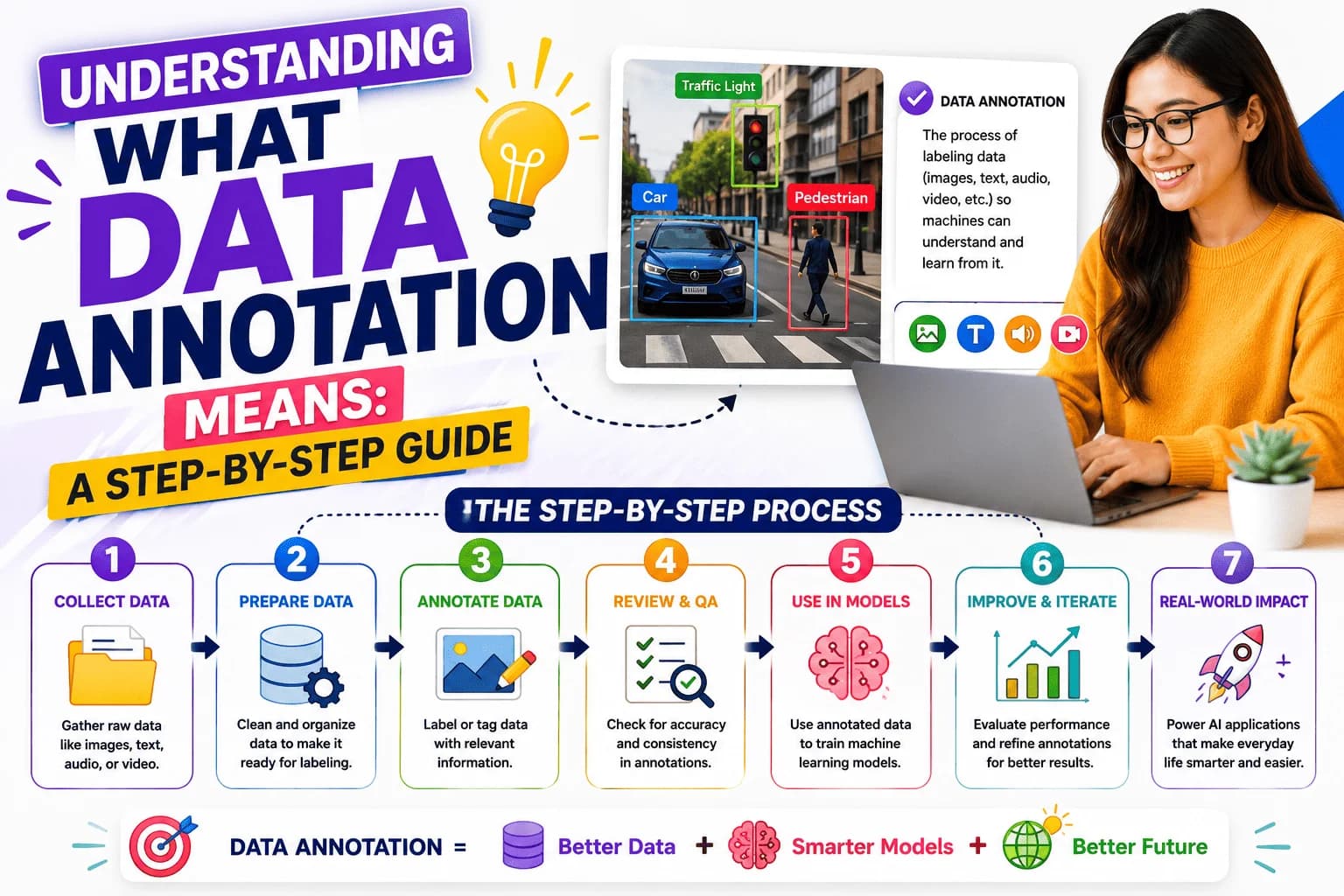
Data annotation is a crucial process in the world of machine learning and artificial intelligence. It involves labeling data to make it understandable for machines. In eCommerce, this means tagging images, text, or videos so that algorithms can learn from them and improve user experience. Let's dive into how you can get started with data annotation.
Table of Contents
- Step 1: Gathering Your Data
- Step 2: Choosing the Right Annotation Tools
- Step 3: Training Your Annotation Team
- Step 4: Implementing Quality Control Measures
- Data Annotation in the Philippines: Market Overview
- The Hidden Value of Accurate Data Annotation
- Frequently Asked Questions
Step 1: Gathering Your Data
The first step in data annotation is collecting the right set of data. For eCommerce, this could include product images, customer reviews, or video content. Businesses in the Philippines, where 67.26% of the population are internet users as of 2024, have a wealth of digital data to leverage. The key is to ensure that this data is representative of what you want to teach your algorithms.
Data collection can be a daunting task, especially when aiming for a dataset that is diverse and comprehensive. Consider leveraging existing data from your eCommerce platform, such as transaction records and customer interaction data. Additionally, third-party sources like social media and market research reports can provide valuable insights.
In the Philippines, the digital landscape is rapidly evolving, offering a rich tapestry of data for annotation. The challenge lies in curating this data to ensure it aligns with your business objectives. For instance, if your goal is to improve product recommendation systems, focus on collecting data related to user preferences and browsing behavior.
Step 2: Choosing the Right Annotation Tools
Once you have your data, selecting the appropriate tools for annotation is crucial. There are numerous software options available, each with different features. When choosing, consider factors like ease of use, collaboration capabilities, and cost. Some popular tools include Labelbox and Amazon SageMaker. Remember, the right tool can significantly impact the efficiency and accuracy of your annotation process.
Annotation tools should be evaluated not just on their features but also on their flexibility and adaptability to your specific needs. For eCommerce businesses, tools that support image and text annotation are particularly valuable. Some platforms offer automated annotation features, which can speed up the process significantly while maintaining accuracy.
Moreover, consider the integration capabilities of these tools with your existing systems. Seamless integration ensures that the annotated data can be easily fed into your machine learning models. This reduces the turnaround time and enhances the overall operational efficiency of your data projects.
Step 3: Training Your Annotation Team
Training your team is a step that cannot be overlooked. A well-prepared team ensures high-quality annotations. In the Philippines, where the total labor force reached 52,204,133 in 2025, tapping into skilled human resources can be a strategic advantage. Training should cover the specifics of the annotation tool and the nuances of the data being annotated.
Effective training programs often include hands-on workshops, where team members can practice using the tools in a controlled environment. This practical experience helps them understand the complexities of data annotation and develop the necessary skills to perform their tasks efficiently.
Furthermore, it is important to instill a strong understanding of the business objectives behind the data annotation tasks. When annotators understand how their work contributes to the larger goals, they are more likely to perform with precision and attention to detail. Regular feedback loops and performance assessments can also help maintain high standards.
Step 4: Implementing Quality Control Measures
Quality control is essential to ensure the accuracy and reliability of your annotated data. Implement checks such as spot reviews and cross-verification by multiple annotators. This step is crucial because inaccuracies can lead to faulty machine learning models, which ultimately affect business outcomes.
Quality assurance in data annotation involves several layers of checks and balances. One effective method is the double-blind review process, where annotations are reviewed independently by different team members. This helps identify discrepancies and ensures consistency across the board.
In addition to manual reviews, some businesses utilize automated quality control tools that flag potential errors in the annotation process. These tools can scan for anomalies and provide insights into areas that require human intervention. By combining both automated and manual quality checks, businesses can achieve a high level of data integrity.
Data Annotation in the Philippines: Market Overview
The data annotation market in the Philippines is poised for growth, driven by the increasing demand for AI solutions in eCommerce. With a GDP per capita of 3,984.83 USD in 2024, the country is becoming an attractive hub for digital innovation. Companies investing in data annotation can expect improved customer insights and enhanced algorithm performance.
Given the country's robust labor force and increasing internet penetration, the Philippines is well-positioned to become a key player in the data annotation industry. Many international companies are already outsourcing their annotation tasks to Filipino firms, attracted by the combination of cost-effectiveness and skilled workforce.
Moreover, the government's push towards digital transformation further bolsters the potential of data annotation. Initiatives aimed at enhancing digital skills and infrastructure are paving the way for a thriving ecosystem that supports advanced AI and machine learning projects.
Source: World Bank Open Data
The Hidden Value of Accurate Data Annotation
One aspect often overlooked in data annotation is its indirect value. Accurate annotations lead to better AI models, which can enhance customer experience and drive sales. Most businesses focus solely on the immediate output, but the long-term benefits include improved decision-making and competitive advantage in the eCommerce space.
Accurate data annotation acts as the foundation for predictive analytics and intelligent automation. With precise annotations, machine learning models can accurately predict consumer behavior, which is invaluable for eCommerce platforms aiming to increase conversion rates and personalize shopping experiences.
Additionally, well-annotated data helps businesses identify trends and patterns that may not be immediately visible. This deeper understanding can inform strategic decisions, such as inventory management and marketing strategies, ultimately leading to more efficient operations and increased profitability.
Frequently Asked Questions
What is data annotation?
Data annotation is the process of labeling data to make it understandable for machine learning algorithms. This is crucial in training AI models.
Why is data annotation important in eCommerce?
In eCommerce, data annotation helps improve product recommendations, customer support, and personalized marketing strategies, enhancing the overall customer experience.
What tools are best for data annotation?
Some of the best tools include Labelbox, Amazon SageMaker, and V7. The choice depends on your specific needs and budget.
How can I ensure high-quality data annotation?
Implement quality control measures like regular spot checks and cross-verification to ensure accuracy and consistency in your annotations.
What is the future of data annotation in the Philippines?
With a growing digital economy and a skilled labor force, the Philippines is well-positioned to become a leader in data annotation for AI solutions in various sectors, including eCommerce.
Latest Virtual Assistant Jobs
Fresh remote VA roles — apply directly