
How to Use Annotation on YouTube: A Step-by-Step Guide
Quick Answer
Learn how to effectively use annotation on YouTube to enhance viewer engagement with this detailed step-by-step guide.
Table of Contents
YouTube annotations might seem like a relic from the past, but understanding how they work can significantly boost viewer engagement on your channel. Despite being an older feature, they still hold value for content creators who want to maximize their reach and impact.
Annotations on YouTube are interactive elements added to videos to enhance viewer interaction. They can be used for various purposes, such as directing viewers to other videos, encouraging subscriptions, or providing additional information. Although YouTube has transitioned to using end screens and cards, understanding annotations can still be beneficial for legacy content.
Table of Contents
- Understanding YouTube Annotations
- Setting Up Your YouTube Channel for Annotations
- Creating and Adding Annotations
- Optimizing Annotations for Engagement
- Annotation YouTube: Stats and Impact
- Common Mistakes to Avoid with Annotations
- Frequently Asked Questions
Understanding YouTube Annotations
YouTube annotations were introduced as a way to make videos more interactive and engaging. These annotations could be text, links, or even hotspots placed over the video content. While they were phased out in favor of newer features, such as cards and end screens, annotations still exist in older videos and can serve as an important tool for understanding how to engage viewers effectively.
Annotations allowed creators to add layers of information directly onto their videos, encouraging viewers to interact with the content. This could include subscribing to a channel, visiting a related video, or even exploring external links. The ability to guide a viewer's journey through a series of annotations was a powerful way to increase watch time and engagement.
For viewers in the Philippines, where 67.26% of the population were internet users in 2024 (World Bank), annotations provided an interactive experience. Creators could leverage these tools to connect with a tech-savvy audience eager for more engaging content. This level of interaction was particularly effective at a time when internet penetration was steadily rising.
Nowadays, while annotations are no longer actively used, understanding their purpose and functionality can help creators transition to using cards and end screens more effectively. The principles of viewer engagement remain the same: provide value, guide the viewer, and encourage interaction.
Setting Up Your YouTube Channel for Annotations
Before you can start adding annotations, it's essential to ensure your YouTube channel is set up for success. This involves several steps, including verifying your account and enabling features like monetization if you plan to direct viewers to external sites. A well-optimized channel is crucial in reaching a larger audience, especially in a region like the Philippines where digital content consumption is on the rise.
Start by verifying your YouTube account, which unlocks additional features such as custom thumbnails and longer uploads. Verification is simple and can be done through YouTube Studio by following the on-screen instructions. Once verified, you can take advantage of the platform's full suite of tools to enhance your content.
Enabling monetization is another critical step. If you're looking to leverage annotations to direct traffic to external sites, you need to have monetization turned on. This not only helps in generating revenue but also allows you to use YouTube's advanced features for promoting your content.
Given the Philippines' GDP per capita of USD 3,984.83 in 2024 (World Bank), many creators look to YouTube as a viable platform for income. Ensuring your channel is ready to utilize all features effectively can help you tap into this economic opportunity.
Creating and Adding Annotations
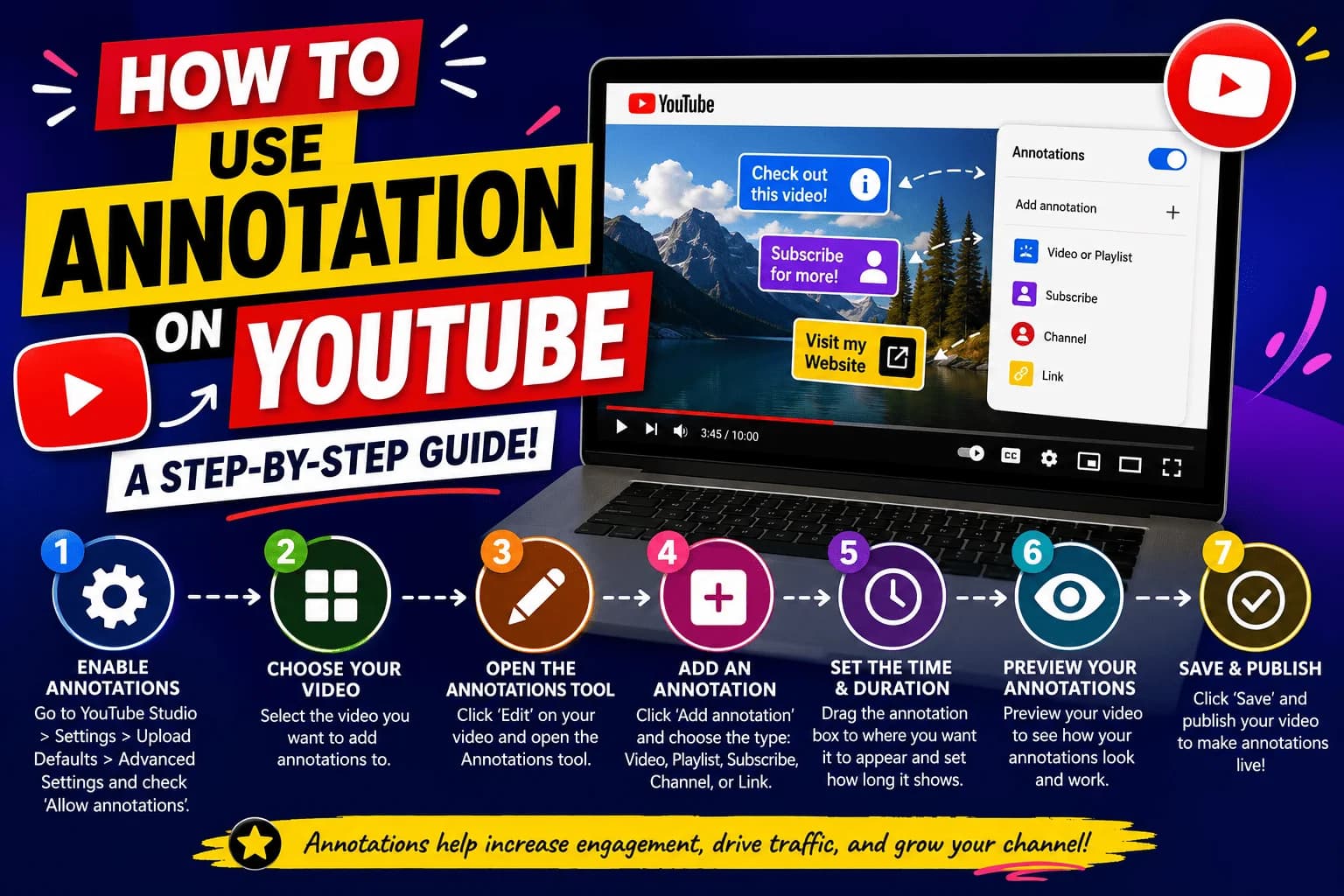
Although YouTube has shifted towards using cards and end screens, knowing how to create and add annotations remains valuable for managing older content. To add annotations, you would typically navigate to the YouTube Studio, select the video you want to edit, and look for the annotations section. This area allowed you to choose from different types, such as speech bubbles, spotlight annotations, or labels.
When adding annotations, strategic placement is key. You want to ensure they enhance rather than distract from the video's content. Consider adding them at moments where additional information can enrich the viewer's experience or guide them to related content.
Each annotation type served a unique purpose. Speech bubbles were excellent for adding commentary, while spotlight annotations highlighted specific areas of the video. Labels could provide quick links or call-to-action prompts. Using a combination of these strategically can significantly improve viewer interaction with your content.
While you may not add annotations to new videos, understanding their functionality can help you better utilize current tools like cards and end screens, which offer similar benefits but with improved mobile compatibility.
Optimizing Annotations for Engagement
The success of annotations largely depends on how well they are optimized for engagement. Effective annotations are those that add value to the viewer's experience without disrupting the flow of the video. They should be seamlessly integrated and relevant to the content being presented.
One of the best practices is to use annotations to link to related videos or playlists. This keeps viewers on your channel longer and increases overall watch time. For instance, if you're discussing a particular topic in a video, use annotations to direct viewers to a more detailed tutorial or a related case study. This not only provides more value but also demonstrates your channel's depth of content.
Another optimization strategy is timing. Ensure annotations appear at the most relevant points in the video. They should be present long enough for viewers to read and act but not so long that they become intrusive. Balancing this timing is crucial to maintaining viewer engagement.
With the Philippines' GDP per capita at USD 3,984.83 in 2024 (World Bank), content creators in the region are keen on finding efficient ways to monetize their efforts. Properly optimized annotations can play a significant role in directing traffic to monetized content or external revenue streams.
Annotation YouTube: Stats and Impact
Understanding the impact of annotations requires looking at the statistics and their influence on viewer behavior. Although annotations are no longer supported on mobile devices, their legacy in improving viewer engagement cannot be understated. They played a crucial role in directing traffic and increasing watch time.
The Philippines, with its 52,204,133 total labor force in 2025 (World Bank), represents a significant audience for digital content. Annotations were a way to tap into this market by enhancing video interactivity. They directed viewers to additional resources, keeping them engaged longer and increasing the potential for monetization.
Annotations also contributed to channel growth by encouraging subscriptions. Well-placed call-to-action annotations could prompt viewers to subscribe, thereby increasing a channel's follower base. This was particularly valuable for creators looking to build a sustainable online presence.
While newer features have replaced annotations, the principles they were built on continue to guide content strategy on YouTube. Understanding their impact can help creators better leverage current features to achieve similar results.
Source: World Bank Open Data
Common Mistakes to Avoid with Annotations
When using annotations, it's important to avoid common pitfalls that can detract from the viewer's experience. One major mistake is overloading a video with annotations. Too many can clutter the screen and distract from the content, leading to viewer frustration and potential loss of engagement.
Another mistake is failing to ensure annotations are relevant and add value. Annotations should serve a clear purpose, whether it's directing viewers to additional content or prompting an action like subscribing. If they don't contribute to the viewer's experience, they're likely to be ignored or worse, cause viewers to tune out.
Annotations also need to be mobile-friendly, or at least their replacements should be. As many viewers access YouTube through smartphones, it's important that any interactive elements are compatible with mobile viewing. This was a limitation with annotations, which led to the development of cards and end screens that are mobile-friendly.
With the unemployment rate in the Philippines at 2.24% in 2025 (World Bank), many individuals are turning to digital platforms like YouTube for career opportunities. Avoiding these common mistakes can help creators maintain a professional and engaging channel, vital for building a successful online presence.
Frequently Asked Questions
Are YouTube annotations still available?
No, YouTube has replaced annotations with cards and end screens, but they remain on older videos.
How can annotations benefit my channel?
They can direct viewers to other content, encourage subscriptions, and provide additional information, enhancing viewer engagement.
Can annotations be used on mobile devices?
Annotations are not supported on mobile devices, which is why YouTube introduced cards and end screens.
How do I remove annotations?
Navigate to the video in YouTube Studio and delete any unwanted annotations from the annotations section.
Do annotations affect video performance?
They can positively influence engagement if used correctly, but overuse can be distracting.
Latest Virtual Assistant Jobs
Fresh remote VA roles — apply directly
Volunteer Administrative Assistant
Bida Games
Sales Development Representative at Prime System Solutions - Hybrid
Senior Executive Assistant for Twoconnect Careers - Remote
Graphic Designer for E-commerce & Retail at Twoconnect Careers - Remote